
Mohamed Abdelkader
IIHR Hydroscience and Engineering, University of Iowa
mohamed-abdelkader@uiowa.edu

HydroLearn
How Good Is Your Forecast? Evaluating Deterministic and Ensemble Streamflow Models
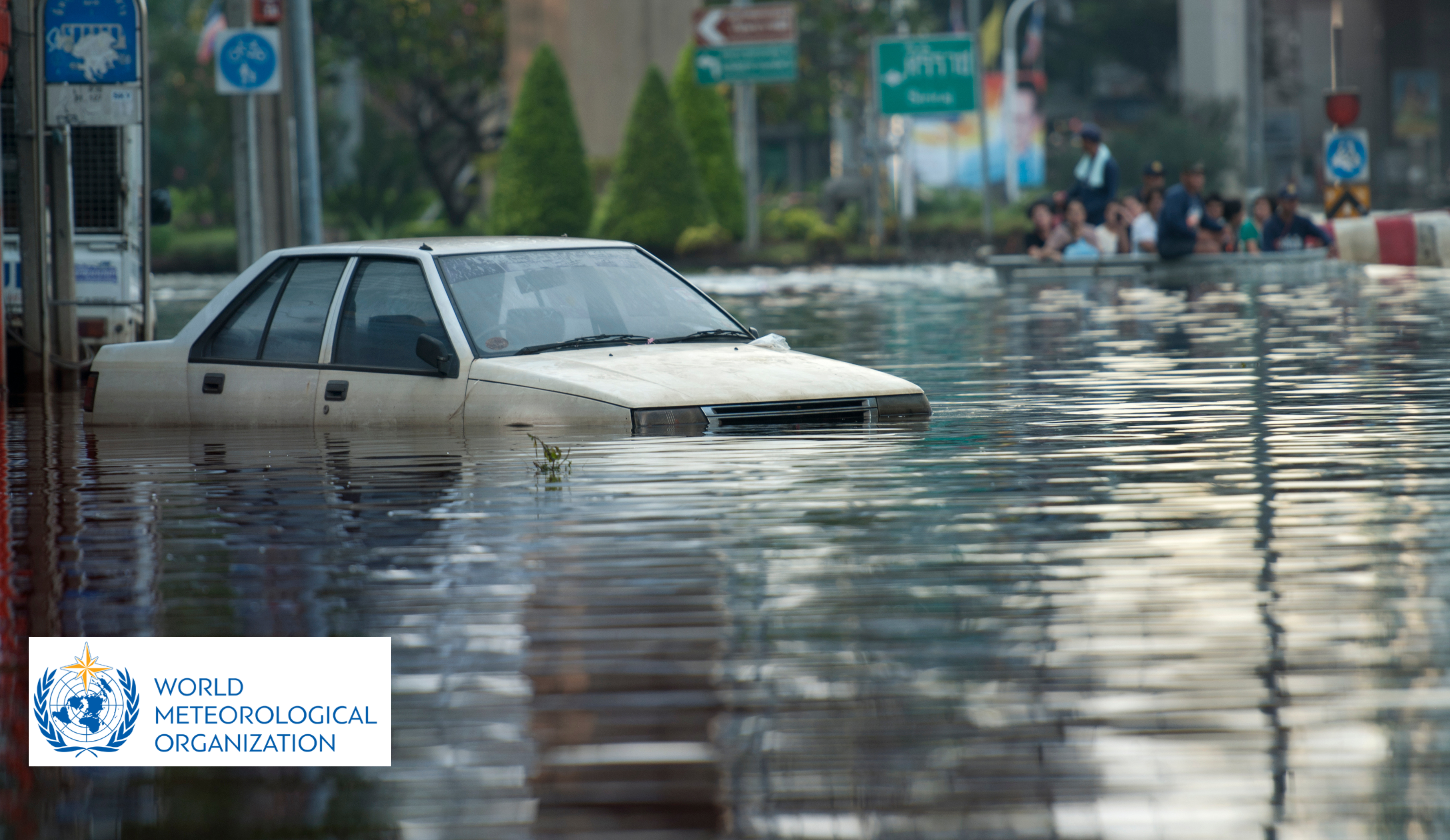
Hydrologic models are routinely used to forecast streamflow for flood warning, reservoir operation, and water-supply planning. Yet the same model can look great on one event and miss the next, and a colorful hydrograph plot can hide important errors. Worse, modern forecast systems do not return a single number any more. They return a cloud of plausible streamflows, an ensemble, and that cloud needs its own kind of verification.
This module gives early-career hydrologists a compact, hands-on introduction to how forecasters actually judge whether a streamflow model is doing its job. It moves you from continuous metrics (RMSE, NSE, KGE, PBIAS) and Moriasi performance ratings, through categorical event verification (POD, FAR, POFD, CSI, ROC), to probabilistic ensemble verification (Brier score, BSS, reliability diagrams, rank histograms, CRPS). At every step you read a real hydrograph, score it, and decide whether the result is fit for an operational decision.
The hands-on activities use the HyMOD conceptual rainfall-runoff model on the Leaf River catchment through a sequence of four Python notebooks, runnable directly in Google Colab.
Deterministic evaluation metrics (RMSE, NSE, KGE, PBIAS); Moriasi performance ratings; hydrograph diagnostics; flow-duration curves; ensemble forecasting; contingency tables; categorical scores (POD, FAR, POFD, CSI); ROC curves and performance diagrams; Brier score and Brier skill score; reliability diagrams; rank histograms; Continuous Ranked Probability Score (CRPS); the HyMOD conceptual model.
Before starting this module, learners should have:
At the end of this module, learners will be able to:
This is accomplished through a series of short readings on fundamental concepts, accompanied by two hands-on Python learning activities and a capstone authentic task.
This module is broken down into four sections with small units. Each section is self-contained and can be exercised individually. Total estimated effort is 1 to 1.5 hours, self paced.
| Section | Estimated time |
|---|---|
| Section 1, Introduction | 5 min |
| Section 2, Deterministic evaluation | 25 to 30 min (includes Learning Activity 1) |
| Section 3, Ensemble evaluation | 30 to 35 min (includes Learning Activity 2) |
| Section 4, Authentic task | 10 to 15 min |
IIHR Hydroscience and Engineering, University of Iowa
mohamed-abdelkader@uiowa.edu

IIHR Hydroscience and Engineering, University of Iowa
Early-career hydrologists and operational forecasters at National Meteorological and Hydrological Services (NMHSs) who want to confidently evaluate streamflow models for operational decisions.
A computer with internet access, a modern browser, and a Google account to run the accompanying Jupyter notebooks in Google Colab (no local install required). Basic working knowledge of Python is helpful.
About 1 hour 15 minutes total (1 to 1.5 hour range). Self paced.
This course is available for export by clicking the "Export Link" at the top right of this page. You will need a HydroLearn instructor studio account to do this. You will first need to sign up for a hydrolearn.org account, then register as an instructor by clicking 'studio.hydrolearn' and requesting course creation permissions.
Abdelkader, M., Vergara, H. (2026). How Good Is Your Forecast? Evaluating Deterministic and Ensemble Streamflow Models. WMO Capacity-Building Activity. University of Iowa.
Module developed for the World Meteorological Organization (WMO) capacity building activity under the Early Warnings for All Initiative. The project is funded jointly by the "Early Warning System for Floods - United States Department of States (EWS-F US DoS)" and the "Supporting Regional Cooperation to Strengthen Operational Multi-Hazard Forecasting and Early Warning Systems at National Level in the South-West Indian Ocean (CREWS South-West Indian Ocean)" projects.